Cannabis Retailers Reveal the Hidden Costs That Blindside New Store Operators
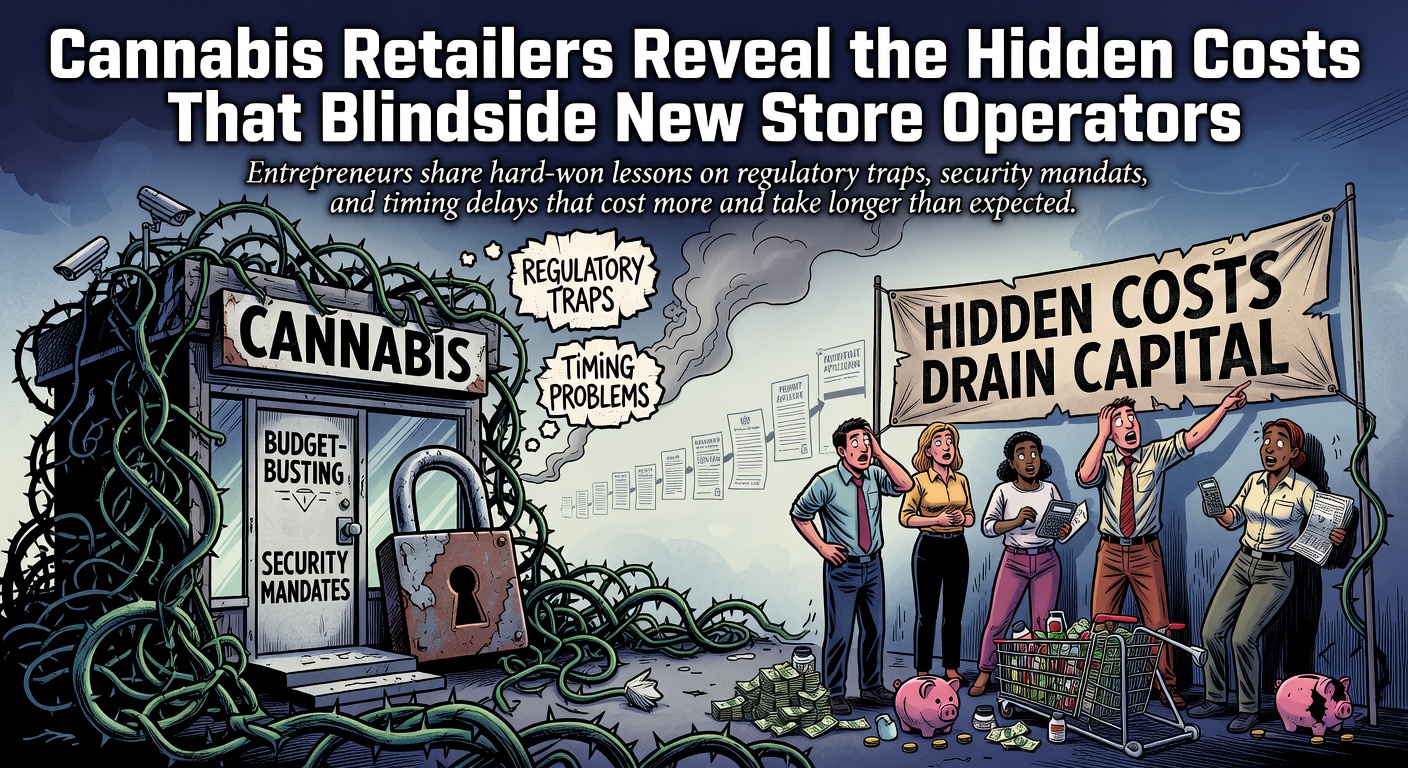
Opening a cannabis dispensary looks straightforward on paper: secure a license, lease a space, stock the shelves, open the doors. In practice, the path from permit to first sale is littered with regulatory traps, budget-busting security mandates, and timing problems that can drain an operator's capital before a single customer walks in. Entrepreneurs across multiple states are now sharing hard-won lessons - and the recurring theme is that nearly every phase of the process costs more and takes longer than expected.
Zoning: The Deal-Killer Nobody Saw Coming
Mike Khemmoro, chief operating officer of Mango Cannabis - a small multistate operator with retail permits in four states - learned this lesson acutely when Michigan imposed a new 24% wholesale tax set to take effect on New Year's Day. In a market already defined by aggressive price compression and entrenched incumbents, Khemmoro had no room for error. "We adjusted by essentially tripling what we would normally have purchased for initial inventory," he told MJBizDaily. "Without planning for that, we would have opened even more behind the eight ball than anticipated."
But supply costs are only one piece. Fadi Boumitri, CEO of Ohio's Ascension Biomedical, discovered that his ideal site for Roam Dispensary was dead on arrival - not because of a building defect or a lease dispute, but because a church occupied 2,000 square feet inside a neighboring 45,000-square-foot office building. Ohio law mandates a 500-foot buffer between cannabis retailers and "sensitive uses," which include schools, libraries, parks, and houses of worship. A church doesn't need a steeple to qualify. "We had to put the pencils down and find a totally different site," Boumitri said.
The lesson here is blunt: master the state zoning code and local ordinances before signing anything. Municipalities and counties often layer their own restrictions on top of state rules, including hard caps on the number of licensees within their borders.
Security Buildouts and the Inspector Problem
Compliance-driven construction is where budgets go to die. States typically require camera systems at every entry, exit, and point of sale - with resolution high enough for "clear and certain identification" of anyone on the premises. Steel mesh inventory rooms, commercial-grade safes, and reinforced entry points are standard. None of it is optional.
Billy Qirollari, owner of Sweetlife on Manhattan's Upper East Side, put it plainly: "These systems can add significant cost." High-resolution camera networks alone can run anywhere from $15,000 to $50,000, according to estimates from Catalyst BC, a global cannabis consulting firm. Total startup costs for a retail location can range from $300,000 to $1.5 million.
What accounts for that enormous spread? Partly store size and labor markets. But there's a less predictable variable: individual interpretation. Inspectors whose sign-off you need to open "may interpret requirements differently," Qirollari said. Two stores in the same city, built to the same spec, can face materially different compliance costs depending on who reviews the plans. That's not a system designed for predictability.
Approval Timelines That Bleed Cash
Some operators assume approvals are a single gate. They're not. Community board reviews, local government sign-offs, and state-level processing create a multi-tiered queue - and each tier has its own calendar. In New York City, applicants must notify a community board 30 days before applying to the Office of Cannabis Management. Miss that window, and the next one opens in another 30 days. Meanwhile, rent accrues. Holding costs mount. Construction financing burns.
"Community board reviews and local approvals can delay opening timelines, all while rent and holding costs continue to accrue before a single sale is made," Qirollari said. If you haven't budgeted for months of carrying costs with zero revenue, you're already undercapitalized.
Staffing and Inventory: The Timing Paradox
Here's the catch with hiring: bring staff on too early and payroll eats into your pre-revenue runway. Bring them on too late and they're not trained on compliance protocols, POS systems, or customer flow when you finally open. Cannabis retail employees need to know state-specific purchase limits, ID verification rules, and product handling requirements - none of which can be learned on the fly during a grand opening.
Khemmoro wishes he'd built his team sooner. "It is easier to fly the plane if you are not trying to build it at the same time," he said. Qirollari, for his part, wishes he'd considered a soft opening - a lower-pressure window to iron out operational kinks before the public launch.
Inventory carries its own paradox. Overstocking ties up capital in products that may not match local demand; understocking means empty shelves on day one. Qirollari recommends starting with a smaller, diversified selection to limit exposure. And operators should expect that delivery schedules, intake procedures, and POS configuration will collide with ongoing construction and inspections - because they almost always do.
The common thread across all five lessons is unglamorous but essential: buffer everything. More time. More money. More legal review. The cannabis retail business rewards those who plan for friction, not those who plan around it.