Blüm Dispensary Masks Credit Card Purchases as Food Truck Sales
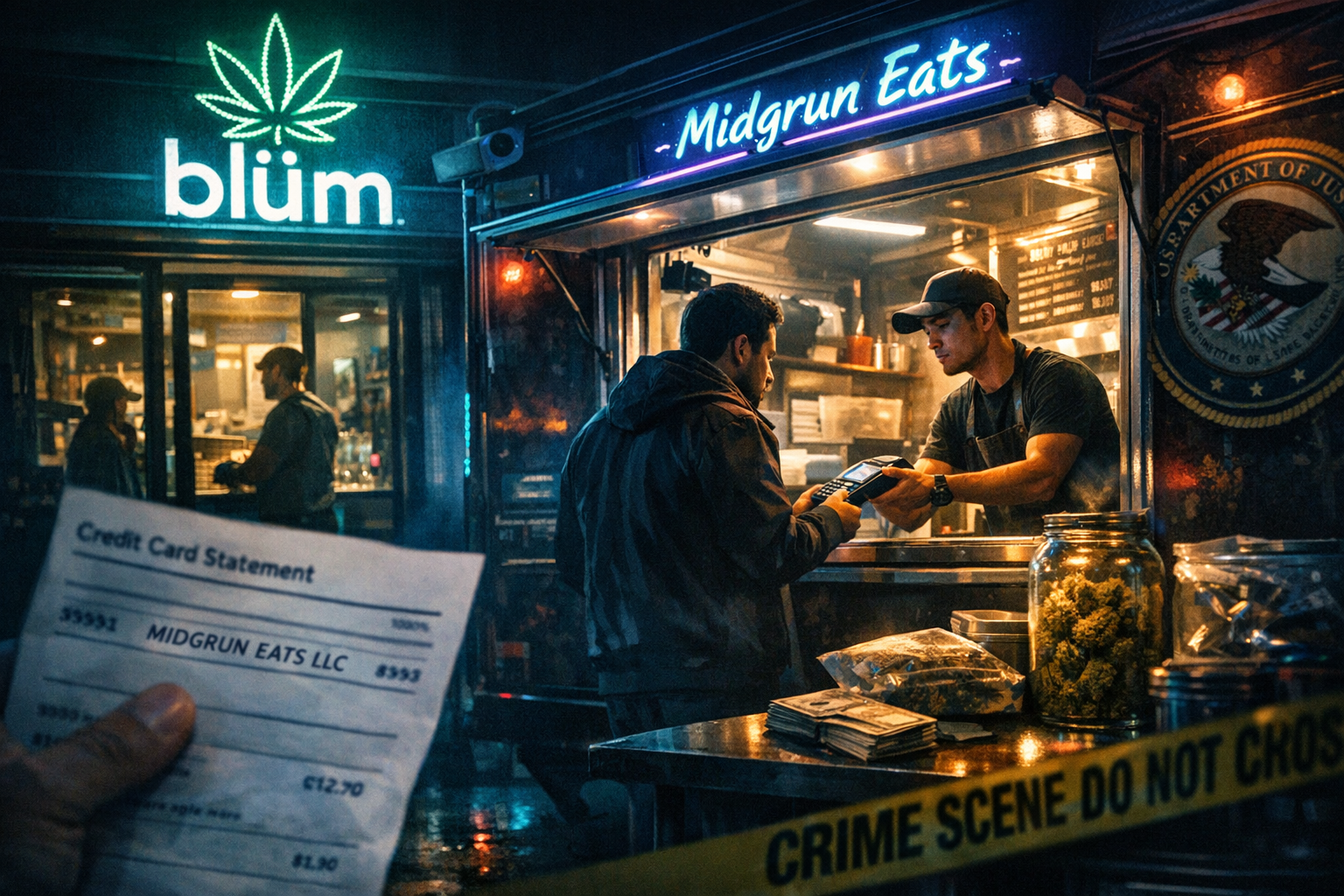
A Midtown marijuana dispensary called Blüm processes credit card payments that appear on statements as purchases from "Midgrun Eats LLC food truck." This practice allows the business to accept cards in an industry that operates almost entirely on cash due to federal restrictions. Experts describe it as a risky workaround that boosts convenience and sales while inviting potential legal scrutiny.
A Workaround for Cash-Only Realities
Marijuana remains illegal under federal law, classified alongside heroin, which prevents federally insured banks from serving dispensaries. Credit cards, processed through bank-backed networks, stay out of reach for most operators, forcing reliance on cash, ATMs, or debit systems. Blüm sidesteps this by labeling transactions under a food truck name, a tactic cannabis finance consultant Jeremy Skaff calls "more like an upper window" than a back door.
Competitive Edge in a Cash-Heavy Market
Calls to all six Blüm locations in Nevada and California confirm they accept credit cards, unlike other Washoe County dispensaries. Skaff notes the convenience draws customers who avoid carrying cash, potentially increasing business through more payment options. Cannabis advocate Will Adler highlights the advantage: credit card rewards and ease set Blüm apart, especially as the only local operator pulling it off consistently.
Legal Risks and Money Laundering Concerns
Banking attorney Candace Carlyon warns that disguising marijuana proceeds as food truck sales crosses into felony territory under money laundering laws, which prohibit concealing the source of funds from unlawful activity. While state tax rules impose no credit card bans, federal enforcers like Nevada's U.S. Attorney Nicholas Trutanich prioritize marijuana law violations; his office neither confirms nor denies scrutiny of Blüm. The chain, owned by California-based Terra Tech, recently settled a fraud lawsuit with a former partner, adding to its profile.
Industry Solutions and Persistent Challenges
Skaff's firm aids cannabis businesses with debit, ATMs, and gift cards—low-risk alternatives that avoid bank involvement—but never endorses credit card fronts. Treasury data shows 633 institutions banking marijuana firms by early this year, up from 400 in 2018, yet credit unions face limits and long waits. Such tactics reflect entrepreneurs cutting corners amid a "terrible situation," as Carlyon puts it, where banking access remains scarce despite state legalization.