Dr. Greenthumb’s Dispensary Seeks Revival of Bucktown’s Troubled Nightclub Site
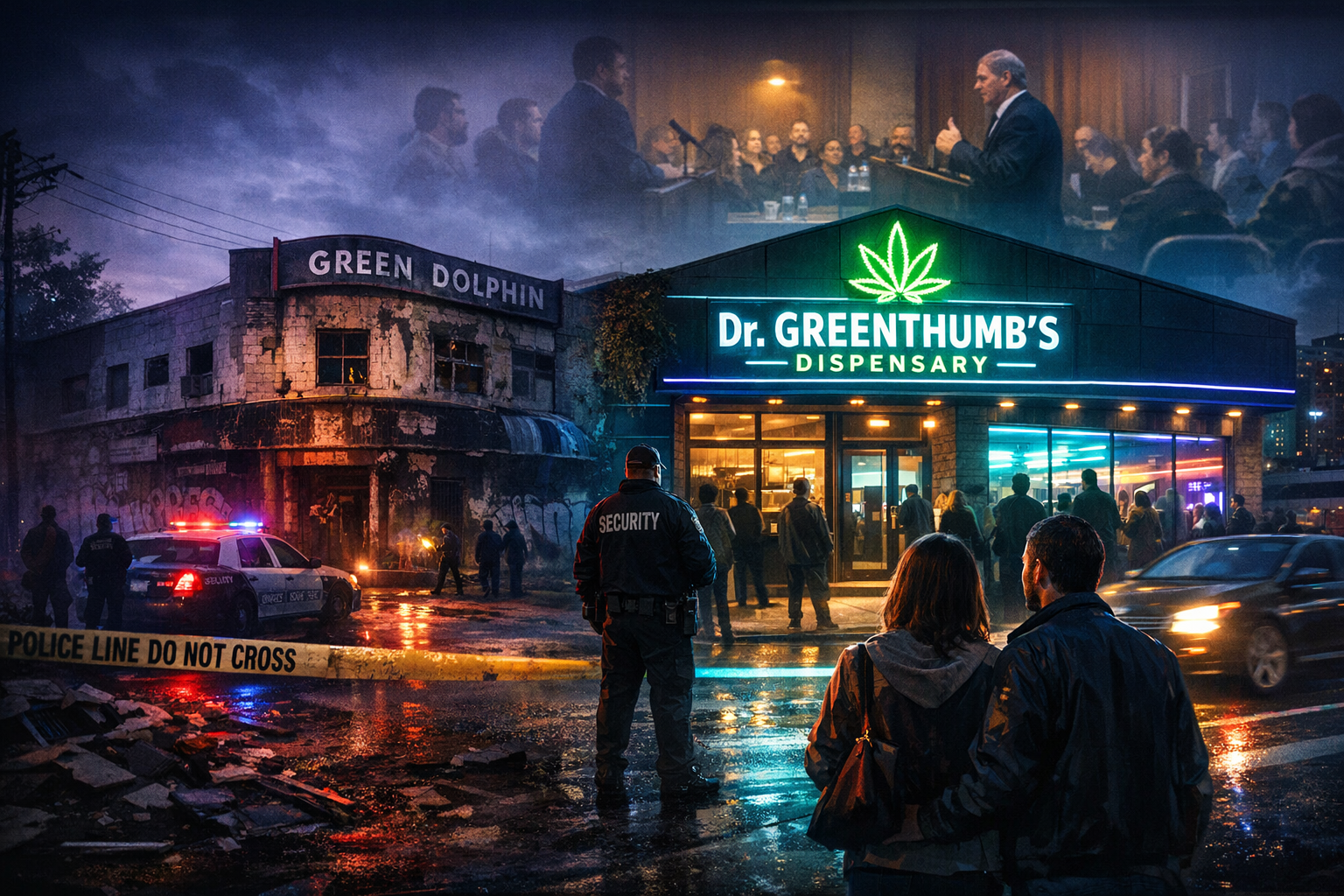
A cannabis dispensary chain plans to transform a long-vacant, violence-scarred building in Bucktown into its first Illinois outpost, sparking resident worries over traffic congestion and neighborhood identity. Dr. Greenthumb’s, operated by TRP, unveiled renovation and security proposals at a community meeting hosted by Ald. Scott Waguespack on Wednesday evening. The move revives a site at 2200 N. Ashland Ave., once home to the notorious Green Dolphin Street nightclub, closed since 2017 after years of crime.
From Violence to Vacancy
The Green Dolphin Street earned infamy through repeated violence in the 2000s and 2010s, including a deadly 2015 altercation that claimed two lives. After a brief reopening under a new name, city officials condemned the property in 2017. Left abandoned, the building decayed amid break-ins, vandalism, and unauthorized raves, turning a community eyesore into a safety hazard.
Ald. Waguespack emphasized securing the site as a priority. He noted that dispensaries bring city revenue but stressed the need for renovations to prevent further intrusions. TRP must undertake extensive work to meet state standards before opening, addressing the blight that has plagued the block.
Security and Community Promises
TRP spokeswoman Anna Mendoza outlined plans to hire local staff familiar with Bucktown, fostering ties with residents. The dispensary will adhere to Illinois cannabis regulations, installing electronic ID scanners, keeping products out of public view, and maintaining constant security patrols inside and outside the building.
These measures aim to mitigate risks associated with cannabis retail, such as loitering or crime spikes seen in some early dispensary markets. Mendoza positioned the operation as community-focused, contrasting it with the site's chaotic past. Still, neighbors questioned whether such promises outweigh broader impacts.
Traffic and Identity Concerns
Residents from the nearby 74-unit Triangle Square condos dominated the meeting, raising alarms about Webster Avenue's rush-hour gridlock from 3 to 6 p.m. One resident highlighted garage access struggles and recent accidents, fearing a dispensary would worsen congestion without a prior traffic study.
Others decried a shift in Bucktown's character, once defined by schools but now dotted with outlets like Ivy Hall at 1720 N. Damen Ave. A neighbor called another dispensary a "bait and switch," eroding the area's family-friendly appeal amid Illinois' expanding cannabis industry since legalization.
Next Steps Amid Debate
Waguespack defended the meeting as a transparency step to gauge opinions before TRP's February presentation to the Zoning Board of Appeals. The proposal pits economic benefits and site cleanup against quality-of-life fears in a neighborhood balancing growth with preservation. As cannabis businesses proliferate, such clashes underscore tensions between revenue generation and residential stability in urban zones.