
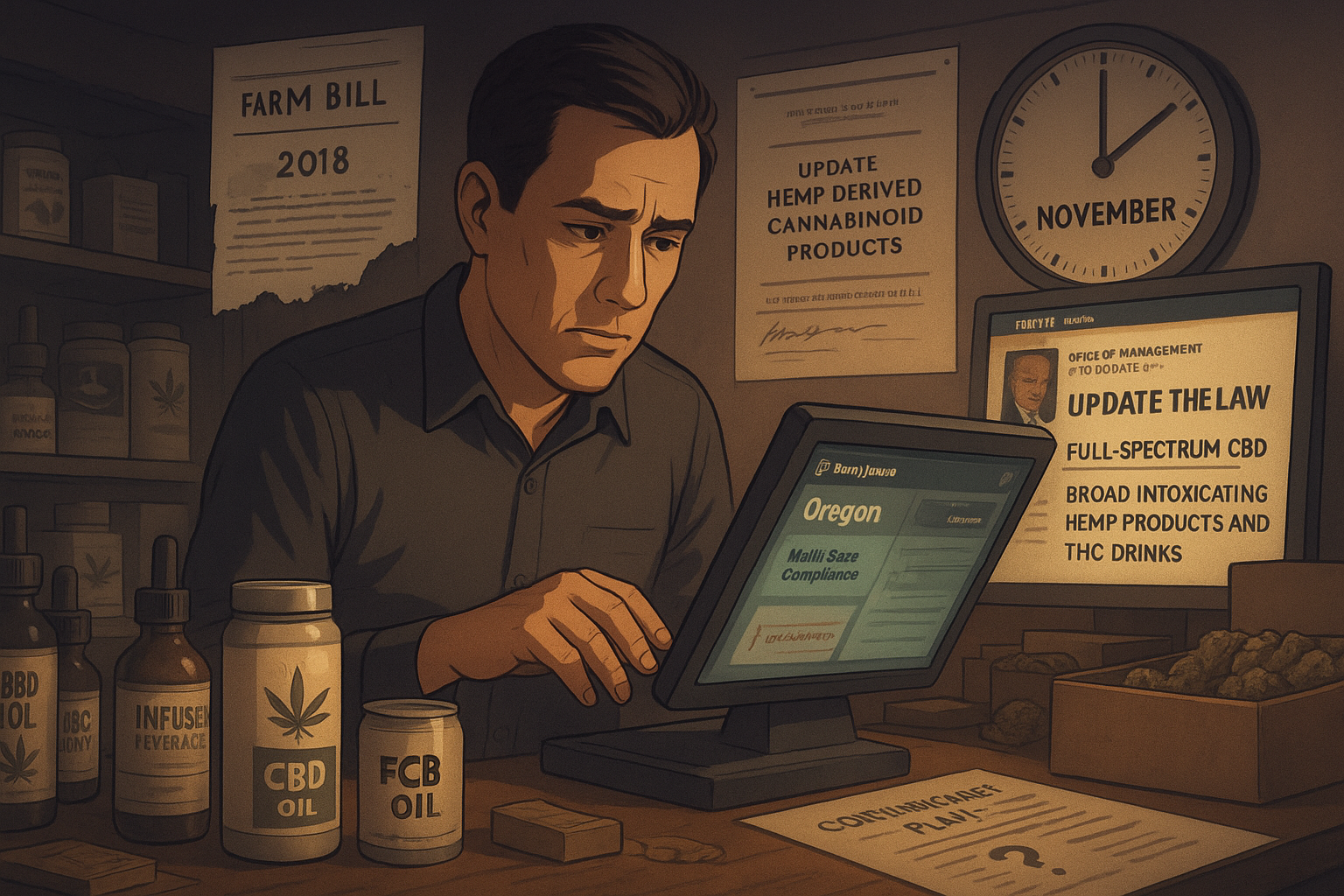
A federal restriction scheduled to take effect this November could effectively remove the majority of hemp-derived products - CBD oils, THC-infused beverages, broad-spectrum supplements - from retail shelves across the country. Congress has yet to act. The Trump administration is now pressing lawmakers publicly and through formal budget channels, but the clock is running short.
The Office of Management and Budget issued a memo tied to a moving agricultural spending bill, making clear the administration wants Congress to update the statutory definition covering final hemp-derived cannabinoid products. The memo specifically calls for preserving access to what it terms "appropriate full-spectrum CBD products" - a narrower framing than the broad intoxicating-hemp market would prefer, but a signal that federal policy attention is real. For retailers and operators tracking this at the compliance layer - from dispensary management platforms to marijuana pos software oregon to multi-state POS deployments - the ambiguity in the current statutory language creates genuine inventory and purchasing risk that grows more acute with each passing week.
President Trump has posted directly on Truth Social calling on Congress to "update the Law" so Americans can continue accessing full-spectrum CBD products. He drew a line, though: his stated position supports CBD access while stopping short of endorsing broad cannabis legalization or the continued open sale of intoxicating hemp products such as THC drinks. That distinction matters for the industry. It suggests that even if Congress moves, the resulting legislation may protect some product categories while leaving others - particularly beverages and edibles with meaningful THC concentrations - exposed to restriction or outright prohibition.
What the Restriction Would Actually Mean for Retailers
Hemp-derived products have become a significant revenue category for a wide range of retailers - not just licensed cannabis dispensaries, but also convenience stores, wellness shops, pharmacies, and e-commerce operations that have never dealt with cannabis compliance before. The 2018 Farm Bill opened that door by removing hemp from the Controlled Substances Act and defining it by its delta-9 THC concentration. What followed was a rapid proliferation of products operating in a regulatory gray zone: delta-8 THC, hemp-derived delta-9, CBD isolates, full-spectrum tinctures, and a growing class of infused beverages.
The proposed restrictions would narrow that market significantly. For licensed dispensaries that have added hemp-derived products to their wholesale menus and budroom inventory - often because those products carry lower regulatory overhead than traditional cannabis SKUs - this is a category-level disruption. Compliance officers would need to audit existing product batches against any new statutory definitions, pull non-compliant items from POS terminals, and renegotiate wholesale pricing with suppliers facing their own inventory exposure. That's not a small operational lift. It's the kind of compliance re-set that takes weeks and carries real cost.
The Administration's Position Has Limits
Here's the catch: executive branch pressure through an OMB memo and social media posts does not move legislation. Congress controls the calendar, and competing priorities - along with genuine disagreement among lawmakers about how far hemp-derived product access should extend - have stalled meaningful progress. The administration's position is also internally bounded. Supporting CBD access while opposing intoxicating hemp products creates a legislative drafting problem; the line between "appropriate full-spectrum CBD" and a hemp-derived THC beverage is not as clean as a policy statement makes it sound. Any bill would have to define those distinctions with regulatory precision, and that work has not been done.
The Centers for Medicare & Medicaid Services recently launched a pilot program allowing certain patients to receive CBD products through participating healthcare providers at no cost - a development that reinforces the administration's stated interest in CBD access specifically. But a CMS pilot does not change the statutory framework under which hemp products are sold commercially. Retail operators should not read the pilot as a sign that broad product protections are imminent.
The Timeline Risk Is Real
November is not far off. Brands and retailers that have built meaningful revenue around hemp-derived products are now in a holding pattern - reluctant to expand inventory, uncertain about reformulation costs, and unable to get reliable signals from Washington about what the shelves will look like on the other side of the deadline. Wholesalers face the same problem: forward purchasing decisions depend on a regulatory clarity that simply does not exist yet.
What operators should be doing now, regardless of how the legislative picture resolves, is straightforward: conduct a product-by-product compliance audit against current and proposed definitions, identify which SKUs carry the highest regulatory exposure, and build contingency purchasing plans for both scenarios. Waiting for Congress is not a compliance strategy. The November date was set in statute, and absent legislative action, enforcement follows the statute - not the administration's preferred outcome.
To put it plainly: the hemp market has operated on regulatory ambiguity for years. That window may be closing fast, and the businesses best positioned to absorb the change are the ones already treating hemp compliance with the same rigor they apply to licensed cannabis operations.