RNA Therapeutics Advance Editing and Amplification at 2026 J.P. Morgan Conference
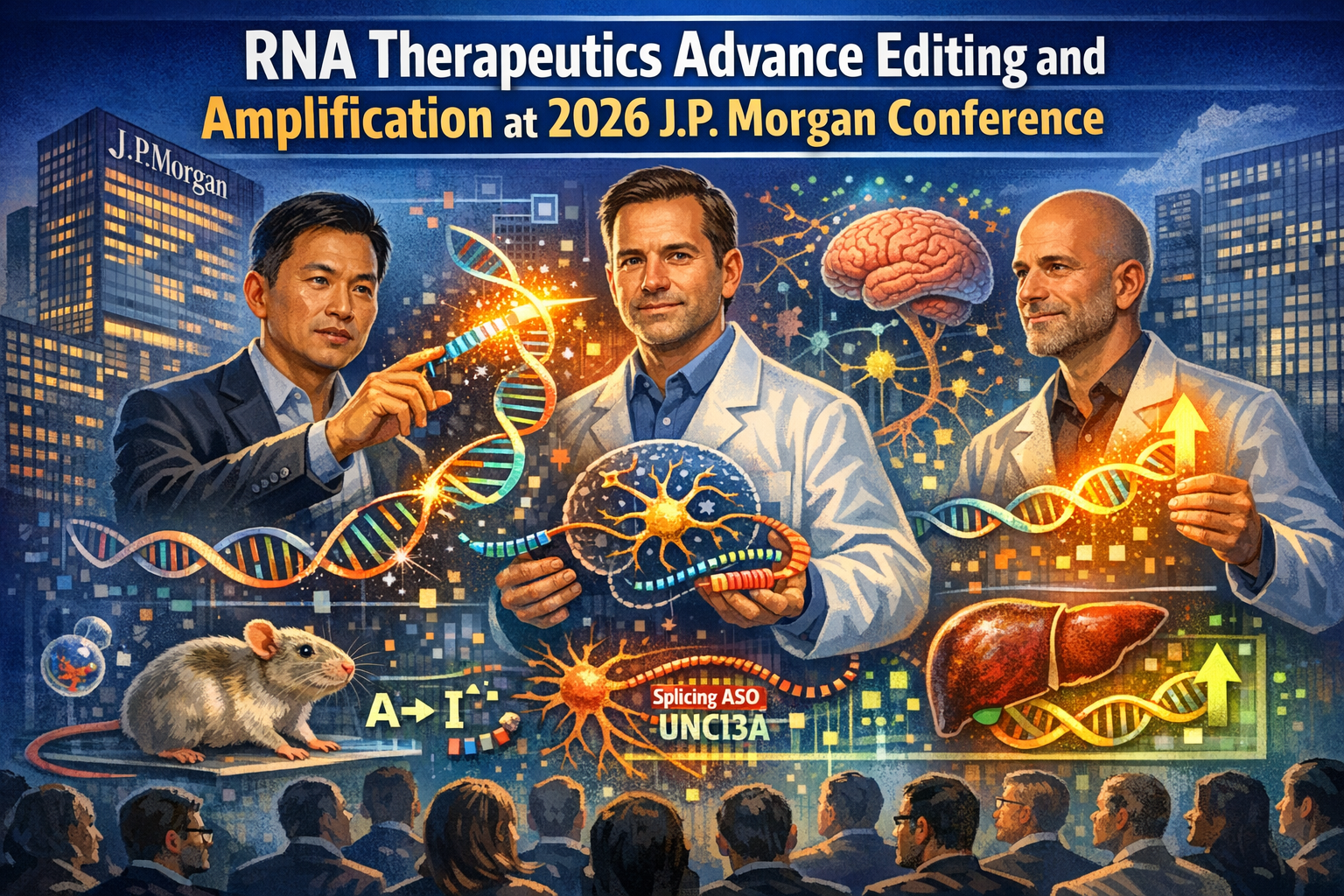
Leaders from Korro Bio, Trace Neuroscience, and CAMP4 Therapeutics highlighted RNA's evolution from gene silencer to versatile medicine at the 2026 J.P. Morgan Healthcare Conference. This "middle ground" in genetic therapies offers precision without permanent DNA changes, balancing efficacy and safety for chronic and late-onset diseases. Their presentations underscore RNA's growing role in addressing unmet needs in metabolic, neurodegenerative, and neurodevelopmental disorders.
Korro Bio Harnesses Natural RNA Editing Mechanisms
Korro Bio CEO Ram Aiyar, PhD, emphasized RNA editing's biological foundation: human cells naturally convert adenosine to inosine using ADAR enzymes. Korro directs this process with proprietary antisense oligonucleotides, enabling precise changes to RNA without touching DNA. This approach provides reversibility, making it suitable for conditions where lifelong alterations seem excessive.
The company's initial program for alpha-1 antitrypsin deficiency demonstrated RNA correction and protein repair in humans, though it fell short of therapeutic levels. Korro halted that effort, streamlined operations, and shifted to KRRO-121 for urea cycle disorders and hepatic encephalopathy. Set for clinical trials in the second half of 2026, this therapy edits a single amino acid to stabilize a metabolic enzyme, potentially reducing ammonia with dosing every two to four weeks. Preclinical results showed near-100% RNA editing in animals, hinting at broad applicability across the transcriptome.
Trace Neuroscience Targets Splicing Defects in ALS
Trace Neuroscience co-founder and CEO Eric Green, MD, PhD, focused on RNA splicing corrections for amyotrophic lateral sclerosis (ALS). Nearly all ALS patients lose UNC13A protein due to faulty splicing caused by TDP-43 dysfunction, not gene sequence errors. Trace's antisense oligonucleotide (ASO) binds UNC13A RNA to restore proper splicing, mirroring the success of ASOs like Spinraza in spinal muscular atrophy.
Preclinical models confirm potent UNC13A protein restoration, tackling a pathology in 97% of ALS cases. Intrathecal delivery ensures distribution to the spinal cord and cortex, with durability possibly allowing just a few doses yearly. This TDP-43 mechanism also drives mis-splicing in frontotemporal dementia and some Alzheimer's cases, suggesting one construct could serve multiple diseases.
CAMP4 Boosts Gene Expression via Regulatory RNAs
CAMP4 Therapeutics CEO Josh Mendel Brehm and CFO Kelly Gold described upregulating healthy genes through non-coding regulatory RNAs from enhancers and promoters. Their ASOs roughly double expression, ideal for haploinsufficiency disorders where protein levels drop to 50%. The lead program targets SYNGAP1-related neurodevelopmental epilepsy, a severe condition lacking disease-modifying treatments.
Like Trace, CAMP4 uses intrathecal dosing for CNS delivery and proven oligonucleotide platforms. With non-CNS partnerships and clinical entry for SYNGAP1 this year, CAMP4 operates as a product-focused company built on capital efficiency.
RNA Medicines Reshape Genetic Therapy Landscape
These efforts expand RNA beyond silencing to editing, splicing repair, and amplification—all without DNA modification. Grounded in human genetics and mature delivery methods, they address risks of permanence while matching small molecules' flexibility. For patients, this means tailored options: transient fixes for chronic ills, potent interventions for rare diseases. As validated at JPM 2026, RNA therapeutics prioritize practicality, signaling a maturing field ready for broader clinical impact.