
Canada's National Cannabis Lobby Group Goes Dormant as Industry Pressures Mount
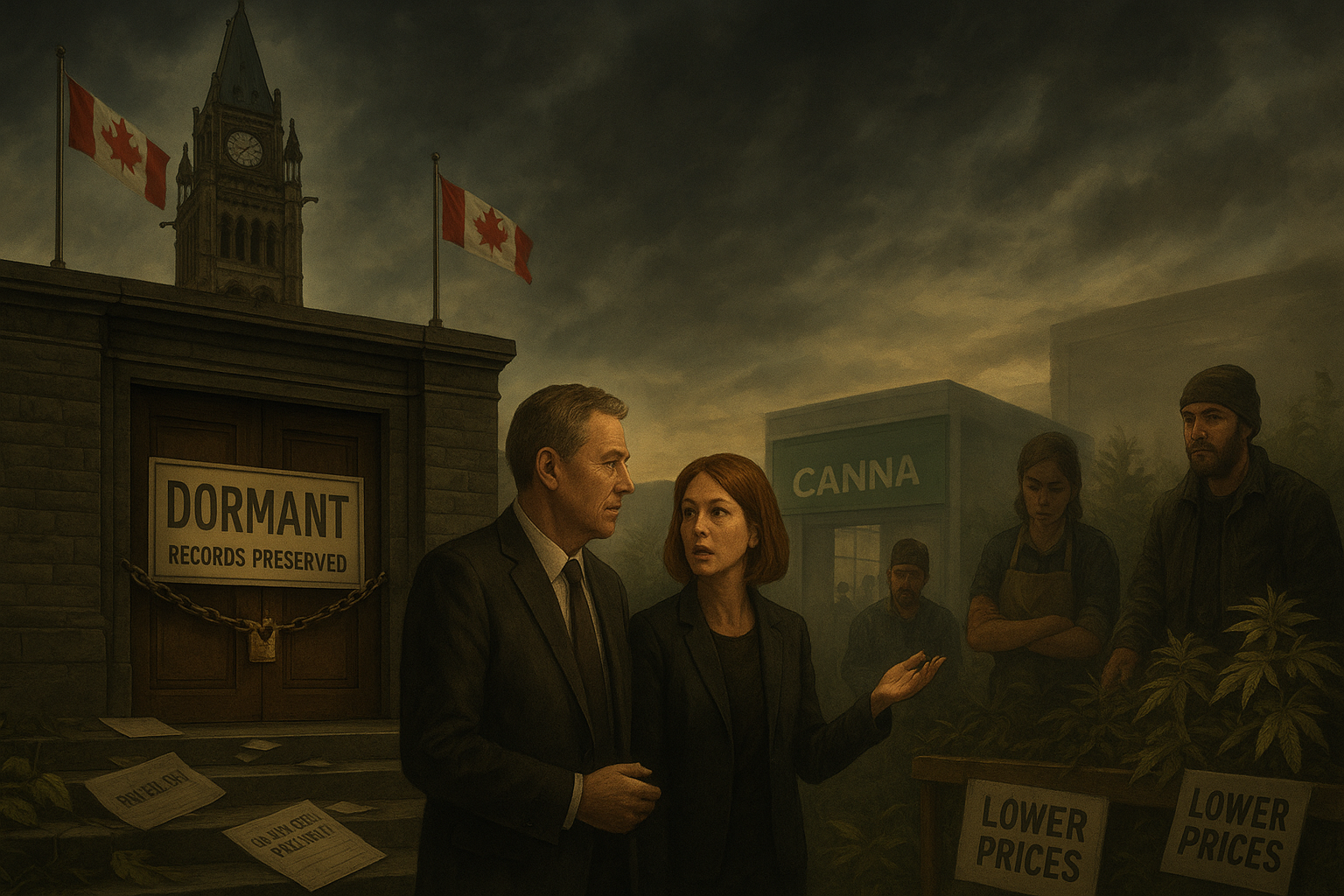
The Cannabis Council of Canada has suspended active operations and entered a period of dormancy - a move that signals just how deeply the financial and regulatory strains gripping Canada's licensed cannabis sector have spread, reaching even the organizations built to defend it. The Council's board has said it will preserve its records and institutional knowledge while considering what role the organization can realistically play going forward. There is no announced timeline for a return to active advocacy.
The decision did not come out of nowhere. Canada's licensed cannabis market has been grinding through a prolonged period of financial pressure, constrained margins, and an illicit sector that has proven far more resilient than regulators anticipated when adult-use legalization took effect in 2018. Licensed operators - the dispensaries, cultivators, processors, and wholesalers that built businesses inside the regulated framework - have consistently faced cost structures that the illicit market simply ignores: excise tax obligations, compliant packaging requirements, lab testing and certificate of analysis documentation, seed-to-sale tracking, licensing fees, and strict advertising rules. For operators elsewhere trying to understand how licensed market economics can erode even under a fully legal framework, it's worth exploring how different regulatory models affect retail sustainability - you can learn more about how one major U.S. market has structured its approach to these pressures.
The Council's suspension reflects something broader than a single organization's budget problem. Trade associations in any regulated industry depend on membership dues and the willingness of operators to fund collective advocacy. When margins compress - when licensed retailers are watching wholesale pricing drop, competing against unlicensed product, and absorbing tax burdens that have no parallel in gray-market operations - the budget line for association dues is often the first to go. That's not a failure of commitment; it's basic operating-cost arithmetic. The same financial logic that has pushed some licensed Canadian cannabis companies into restructuring or insolvency has now constrained the association meant to represent them in Ottawa.
What the Council Actually Did - and Why That Work Mattered
National-level advocacy in a federally legalized cannabis market like Canada's is not a ceremonial function. The Cannabis Council engaged directly with government on policy questions that have real, operational consequences for licensed businesses: excise tax rates, regulatory burden, the enforcement gap between licensed and unlicensed sellers, and the structural conditions that determine whether a legal cannabis business can sustain itself long-term. That kind of coordinated, credentialed policy voice is difficult to replace with individual company lobbying, which tends to be fragmented and easier for regulators to discount.
The board's recognition of outgoing President Paul McCarthy reflects how much that work relied on specific leadership. McCarthy guided the organization through two years of exceptional difficulty - a period when the gap between the promise of legalization and the economic reality facing licensed operators became impossible to paper over. Acting Chair Megan McCrae noted that his tenure "provides a strong foundation for any future work," language that reads less as boilerplate and more as a deliberate signal that the Council is not formally dissolving. The door is left open. Whether the industry can eventually resource a return to active advocacy is a different question.
The Enforcement Gap Is the Unresolved Problem
Here's the structural issue that no trade association statement fully resolves: Canada's illicit cannabis market did not contract the way legalization proponents expected. Licensed retailers operate under a compliance architecture that adds cost at every stage - from cultivator to processor to retailer - while unlicensed sellers carry none of that overhead. The result is a price differential that legal operators cannot easily close without regulatory intervention on the enforcement side or meaningful tax relief. Both require exactly the kind of sustained national advocacy the Council was providing.
The dormancy of the Cannabis Council does not make that problem disappear. It just means that one of the organized voices pushing for a policy response has gone quiet - at least for now. Individual companies can still engage with regulators, and provincial associations remain active in various forms. But the loss of coordinated national representation is a real gap, particularly on issues that require federal-level engagement.
What This Means for Licensed Operators
For dispensary operators, cultivators, and other licensed businesses inside Canada's regulated market, the Council's dormancy is both a symptom and a signal. A symptom of how broad the financial strain across the sector has become; a signal that the operating environment for legal cannabis has not normalized in the way the industry hoped. The conditions that pushed the Council into dormancy - financial pressure, regulatory complexity, illicit market competition - are the same conditions operators face on the floor every day.
To put it plainly: if an industry cannot sustain the association advocating for it, the underlying economics of that industry deserve serious scrutiny. The Council's board has indicated it will assess the organization's future, which suggests this is a pause rather than a permanent shutdown. But what that future looks like - and whether the licensed sector can eventually consolidate enough financial stability to fund coordinated advocacy again - depends on policy decisions that are still very much unsettled.