
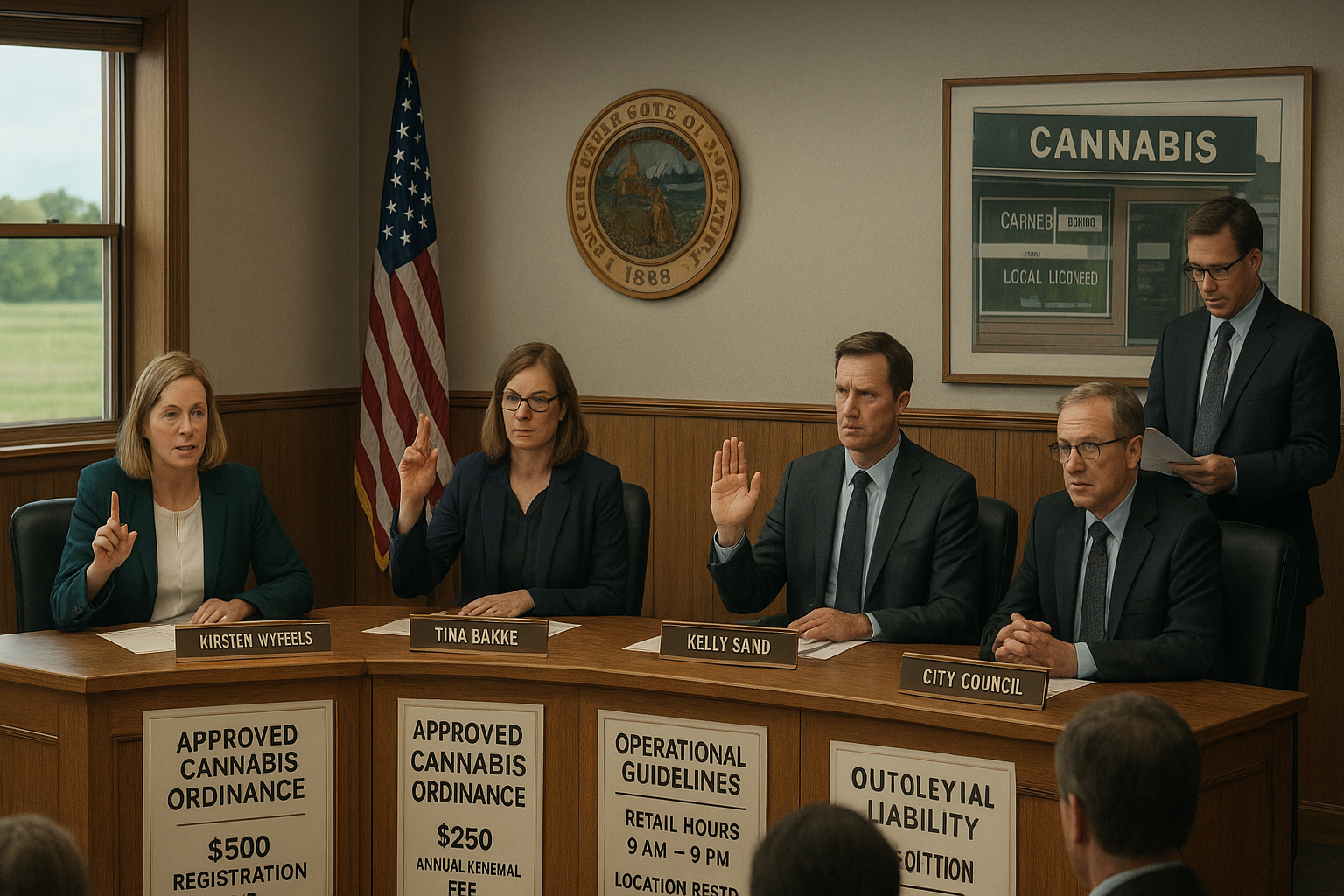
Mabel, Minnesota has joined the growing list of small municipalities formalizing their approach to cannabis retail. On June 10, the Mabel City Council approved a cannabis ordinance by a 4-1 vote, capping months of research, public discussion, and a May public hearing. The measure establishes the regulatory framework the city will use to govern where cannabis businesses can operate, what hours they can serve customers, and how many licensed businesses the city will allow within its limits.
That scope - location, hours, and license caps - reflects the standard toolkit available to municipalities under Minnesota's adult-use cannabis framework. Local governments don't set tax rates or testing requirements; those sit with the state. What they control is the zoning envelope and operational parameters that shape whether a cannabis business is viable at street level. For prospective operators eyeing markets like Mabel, understanding that local licensing layer is as important as state compliance. Operators in adjacent states have learned this the hard way - even in markets with mature regulatory infrastructure, such as those using cannabis point of sale vermont-style systems that integrate compliance tracking at the transaction level, a business can't open its doors until local zoning and licensing approvals are in hand.
The council also established licensing fees alongside the ordinance itself. A $500 registration fee and a $250 annual renewal fee were approved on a motion by Councilmember Kirsten Wyffels, seconded by Councilmember Tina Bakke. Those numbers sit on the lower end of what Minnesota municipalities have adopted - fair enough for a small city, and unlikely to be a barrier to entry on their own. The more consequential decisions for any future applicant will be the zoning map and the license cap, neither of which was publicly specified in the council's discussion as reported.
One Dissenting Vote, and What It Signals
Councilmember Kelly Sand cast the lone no vote, explaining that he didn't feel he had enough knowledge to support the measure. That's not an unusual position in smaller markets where cannabis regulation is genuinely new terrain for local officials - and it's worth taking seriously rather than dismissing. City Attorney Greg Schieber was on hand to field questions, and his presence suggests the council was at least trying to get the legal framework right before voting. Still, Sand's hesitation points to a real gap that shows up in municipal cannabis regulation repeatedly: local officials are asked to make binding land-use and licensing decisions about an industry they may have limited direct experience with, often with minimal guidance from state agencies that are themselves still standing up their own processes.
For operators looking at markets like Mabel, a divided council is worth monitoring. A 4-1 approval is solid, but a council that includes members who feel underprepared tends to produce ordinances that get revisited - sometimes in ways that tighten restrictions or add compliance layers after initial licenses are issued. Watching how the city builds out its licensing process over the coming months will matter.
What the Ordinance Framework Means for Prospective Licensees
Minnesota's adult-use law gives municipalities meaningful authority to shape the local market. The three levers Schieber described - location, hours, and quantity - interact in ways that can make the difference between a workable retail footprint and an effectively prohibited one. A restrictive buffer zone can eliminate most commercially zoned parcels in a small city. A cap of one or two licenses in a town of Mabel's size limits competition but also limits consumer access. And hours of operation that don't align with neighboring retail - say, a hard close at 8 p.m. in a community where customers shop late - can materially affect revenue.
The ordinance as passed gives the city the structure it needs to begin accepting license applications, assuming the state's licensing pipeline is open to applicants in that jurisdiction. Operators who are tracking this market should confirm whether Mabel has opted in or out of specific cannabis business types under state law, since Minnesota allows municipalities to restrict certain categories - delivery, for instance, or on-site consumption - independently of the baseline adult-use framework.
The Broader Municipal Picture
Mabel's approval is one data point in a larger pattern playing out across Minnesota's smaller cities and townships. The state's adult-use framework effectively pushed every municipality to make an active choice: adopt local regulations, or operate without them and default to state rules. Many cities have taken the deliberate path Mabel followed - months of staff research, legal review, public hearing, then a vote. That process takes time, but it tends to produce ordinances that hold up better over the long run than ones passed reactively or under political pressure.
The $500 registration fee and $250 renewal are modest. They won't fund a robust local compliance inspection program on their own. That's a practical limitation worth noting - small cities often lack the staff bandwidth to conduct meaningful compliance monitoring of cannabis licensees, which puts more weight on state-level oversight and on operators' own internal compliance systems. For any business that eventually opens under Mabel's ordinance, keeping clean compliance records, maintaining accurate inventory documentation, and staying current with state reporting requirements won't be optional. In a small market, a single violation tends to attract outsized local attention.