
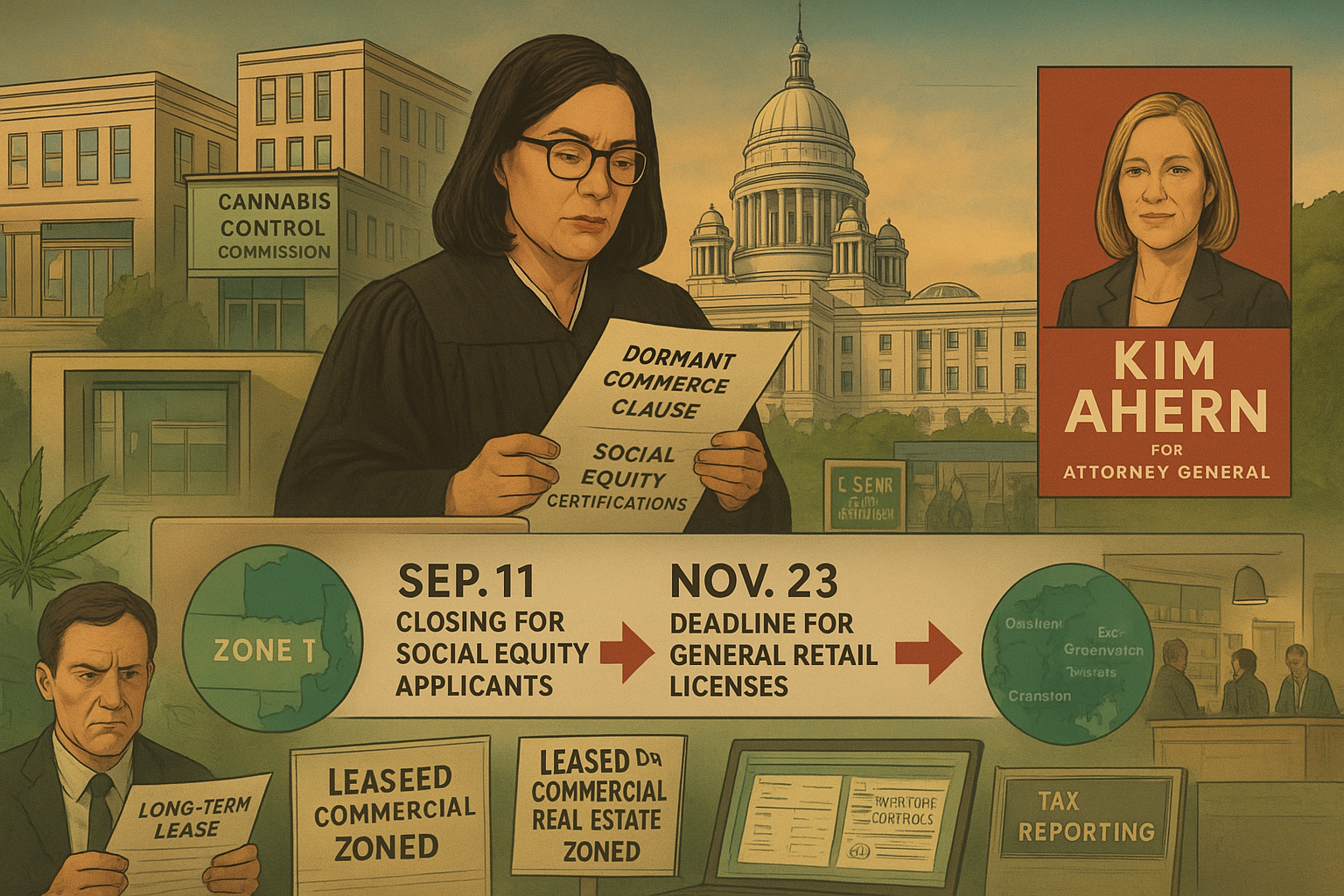
Rhode Island's retail cannabis licensing process is back in motion after a federal court fight over residency requirements forced regulators to scrap every pending application and social equity certification. The General Assembly has since rewritten the offending language, and the Cannabis Control Commission is now running a compressed, two-track timeline: social equity certifications close Sep. 11, and general retail applications remain open through Nov. 23.
For operators who spent the better part of two years lining up real estate, securing zoning approval, and building out compliance infrastructure, the restart is welcome but hardly a clean slate. Anyone who already has a location under lease, or is scrambling to find one before November, will need back-office systems ready to go from day one - inventory controls, tax reporting, and integration with the state's seed-to-sale tracking system chief among them. Vendors offering marijuana pos software have been fielding a fresh wave of interest from applicants trying to get compliant point-of-sale infrastructure lined up before the lottery even runs, since a license without operational readiness is just a piece of paper. marijuana pos software
The legal problem was straightforward, even if the fallout wasn't. Rhode Island's original social equity rules required at least one applicant to be a state resident - a condition that federal courts in multiple jurisdictions had already found unconstitutional under the dormant Commerce Clause before Rhode Island's own version got challenged. Judge Melissa DuBose didn't mince words about the Commission's decision to press ahead with licensing anyway, calling the resulting collapse "self-inflicted." That's a notable rebuke, particularly given the Commission's chair at the time, Kim Ahern, is now running for attorney general.
A Second Application Round, Same Real Estate Problem
Here's the catch with reopening applications rather than simply fixing the flawed rule and moving forward: it invites an entirely new pool of applicants who haven't been carrying lease payments for years while they waited on a lottery outcome. Existing applicants who've been paying rent on properties solely to satisfy licensing requirements are understandably frustrated. They're now competing against newcomers with no sunk costs, in a process that's fully public - meaning everyone can see exactly who applied where, and for which zone.
The state has 24 licenses on offer across six zones, split among social equity, worker cooperative, and general retail categories. The canceled lottery was only set to award 20, since Zone 1 (the northern part of the state) and Zone 4 (East Greenwich, North Kingstown, Cranston, and Warwick) didn't draw enough applicants to fill their allotments. Whether that changes under the new rules, now that implicit residency barriers have been loosened, remains an open question.
Cultivators Are Running Out of Runway
While the licensing fight played out in court, the supply side of the market kept contracting. Rhode Island now has 55 licensed cultivators, down from 58 earlier this year, and just nine operating dispensaries. Of those nine, six are vertically integrated, growing their own product and therefore buying less wholesale flower from independent cultivators. The math isn't complicated: fewer retail doors and more vertical integration means a shrinking customer base for standalone growers, some of whom describe themselves as barely holding on.
The recent dip in cultivator numbers reflects consolidation, not necessarily failure across the board - OP Pharm, LLC merged into New Leaf Compassion Center, a vertically integrated medical dispensary, while Blackstone Valley Group simply didn't renew its license. Still, the pattern is worth watching. A market with too few retail outlets relative to its cultivation base tends to produce oversupply, downward wholesale pricing pressure, and eventually, exits.
Regulators Face a Timing Tightrope
Before the residency ruling upended everything, the Commission had floated slowing the licensing process further, worried that adding retail capacity too quickly would trigger price compression among the nine existing dispensaries. That's a reasonable regulatory instinct in isolation - protecting incumbent operators from a flood of new competition. In practice, though, it directly conflicts with cultivators' need for more retail shelf space to sell into. Regulators are effectively balancing two constituencies with opposite interests, and the compressed application window doesn't leave much room to reconcile them before licenses go out.
For prospective applicants, the immediate priorities are clear: file social equity certifications by Sep. 11, submit retail applications by Nov. 23, and have real estate and zoning documentation in order before the lottery runs. For everyone else in the supply chain - cultivators, wholesalers, compliance vendors, landlords - the next few months will determine whether Rhode Island's cannabis market gets the retail expansion it needs, or another round of delay.