
States Push New PTSD Treatment Options for First Responders, Including Medical Cannabis Protections
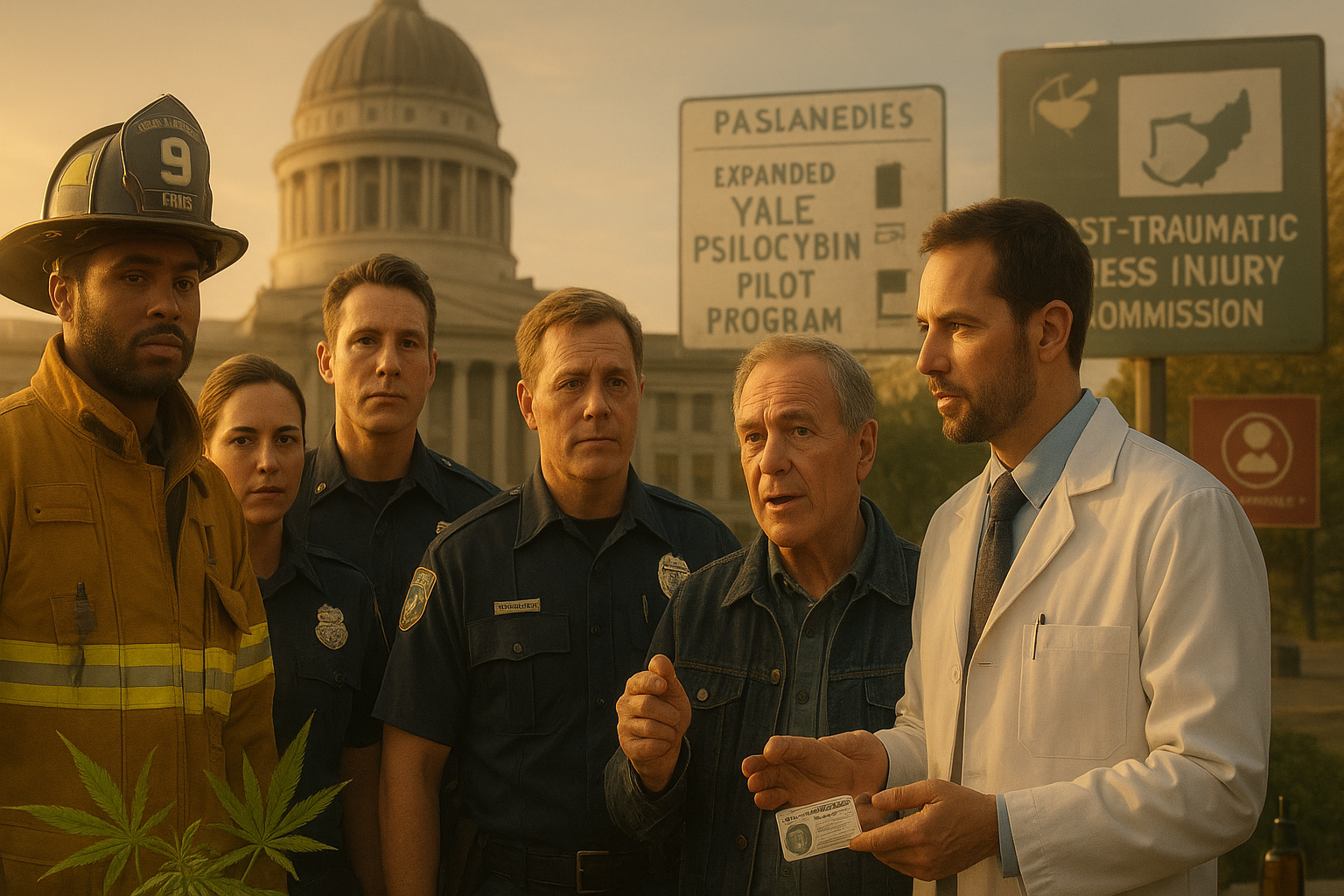
A quiet but consequential shift in first responder mental health policy is playing out across multiple state legislatures this year. From Ohio to Connecticut to Maryland, lawmakers are expanding access to non-traditional PTSD treatments - including medical cannabis and psychedelic-assisted therapy - for firefighters, paramedics, law enforcement officers, and emergency medical workers. The policy momentum reflects growing recognition that conventional counseling and medication alone haven't closed the gap on occupational trauma in these professions.
Maryland's approach is particularly relevant to licensed cannabis operators. The state enacted a law this year protecting firefighters, EMTs, paramedics, and other rescue workers from employment discrimination based on lawful off-duty medical marijuana use. The law, effective in October, applies to registered medical cannabis patients who test positive for cannabis metabolites but are not impaired while on duty - a distinction that carries real compliance weight for employers and, indirectly, for dispensaries serving that patient population. For cannabis retailers tracking medical patient demographics and compliance obligations across state lines, tools like IndicaOnline POS Arizona illustrate how point-of-sale and patient management systems are increasingly built to accommodate the nuanced documentation requirements that laws like Maryland's depend on. Patient status, registry verification, and purchase history - all of it flows through the POS layer, which means the technology stack isn't just a retail convenience; it's a compliance infrastructure.
The broader policy context matters here. Jason Cerrano, a retired Missouri firefighter and paramedic with more than two decades of experience, described how occupational trauma accumulates gradually - not in a single catastrophic event, but through repeated exposure to violent, fatal, and psychologically corrosive incidents. "Stuff builds up over time," Cerrano said, "and what happens is you see so many things that the crazy stuff starts to at least seem normal." That normalization of trauma is precisely what makes treatment-resistant PTSD so difficult to address through standard clinical protocols. It's the reason states are now looking at expanded options.
What the State-Level Legislation Actually Does
The policy responses vary considerably in scope and mechanism. Ohio Gov. Mike DeWine, a Republican, signed legislation creating a Post-Traumatic Stress Injury Commission charged with reviewing applications from eligible first responders seeking financial assistance for treatment costs. That's an administrative infrastructure play - building the apparatus to fund and oversee care, without prescribing which therapies qualify.
Connecticut took a different path. A new state law expands a Yale University psilocybin-assisted therapy pilot program, opening participation to any state resident 18 or older who meets the clinical eligibility criteria set by Yale's institutional review board. Previously, the program was limited to veterans, retired first responders, and frontline health care workers. Broadening access doesn't change the clinical framework - Yale's IRB still controls enrollment criteria - but it signals that psilocybin research is moving from a narrowly targeted intervention toward something with wider applicability.
Missouri advanced a bill that would allow veterans and first responders enrolled in approved research studies to receive psilocybin and ibogaine under medical supervision for PTSD and related mental health conditions. The legislature adjourned in May before the bill reached the governor's desk, which means the proposal remains pending - a familiar outcome in states where psychedelic therapy legislation is still finding its footing.
Why This Matters to Cannabis Retailers and Medical Operators
The Maryland employment protection law is where the cannabis industry's operational interests converge most directly with this broader trend. The law creates a protected class of medical cannabis patients within specific occupational categories. That has downstream implications for dispensaries: patient counseling protocols, medical card verification at point of sale, and documentation of lawful use are all more consequential when patients face occupational risk tied to their registry status.
Here's the catch - while Maryland's law protects registered patients from discrimination over off-duty use, it explicitly excludes impairment on duty from that protection. Dispensaries operating in medical markets need to be clear-eyed about what that line means for their patient-facing communications. Budtenders should not be coaching first responder patients on how to manage their use around duty schedules. That's both an ethical line and a compliance risk. What they can do is ensure patients understand the difference between lawful registration and what the law does and doesn't cover regarding on-duty conduct.
More broadly, as states layer new treatment categories - medical cannabis, psilocybin research, ibogaine - onto existing behavioral health frameworks, the compliance environment for licensed cannabis retailers becomes more complex, not simpler. Patient eligibility, registry requirements, product categories, and testing standards all sit underneath a regulatory architecture that varies state by state. Operators running multi-state footprints already manage that complexity through seed-to-sale tracking systems and state-specific compliance protocols. The entry of novel therapies into adjacent policy spaces doesn't directly change cannabis licensing rules, but it does signal a regulatory environment that is becoming more receptive to non-standard treatments - and that has long-term implications for how medical cannabis programs are structured, funded, and perceived by state governments.
The Operational Takeaway for Licensed Businesses
Employment discrimination protections for medical cannabis patients in high-stress professions represent a meaningful expansion of the practical rights attached to a medical cannabis card. For dispensary operators, that shift in legal posture toward registered patients is worth tracking carefully. It reinforces the legitimacy of the medical channel - and the compliance obligations that come with it. States that extend these protections are, in effect, acknowledging that medical cannabis is a legally sanctioned therapeutic option, not a workaround. That framing matters when operators engage with local regulators, negotiate lease terms, or work through banking relationships that remain complicated by federal scheduling.
The psychedelic therapy legislation moving through multiple states this year is a separate regulatory track - but not an unrelated one. Psilocybin and ibogaine are not cannabis products, and their regulatory path runs through clinical research frameworks rather than cannabis licensing structures. Still, the policy logic overlaps: state governments acknowledging that standard-of-care mental health treatment is failing a specific, high-need population and authorizing expanded access to alternatives. Cannabis operators have been making that argument for years in medical licensing proceedings. Watching how states build oversight infrastructure for psilocybin research - clinical eligibility criteria, institutional review boards, supervision requirements - offers a reasonable preview of how regulated therapeutic access tends to evolve.
For now, the most immediate compliance consideration is Maryland's October effective date. Operators in that state serving first responder patients should ensure their patient intake and POS documentation processes reflect the new legal landscape - not because the law changes what dispensaries sell, but because it changes the legal context in which their patients operate. That's not a small distinction.