
Thai Cannabis Seizures Abroad Force a Hard Reckoning Over Deregulation
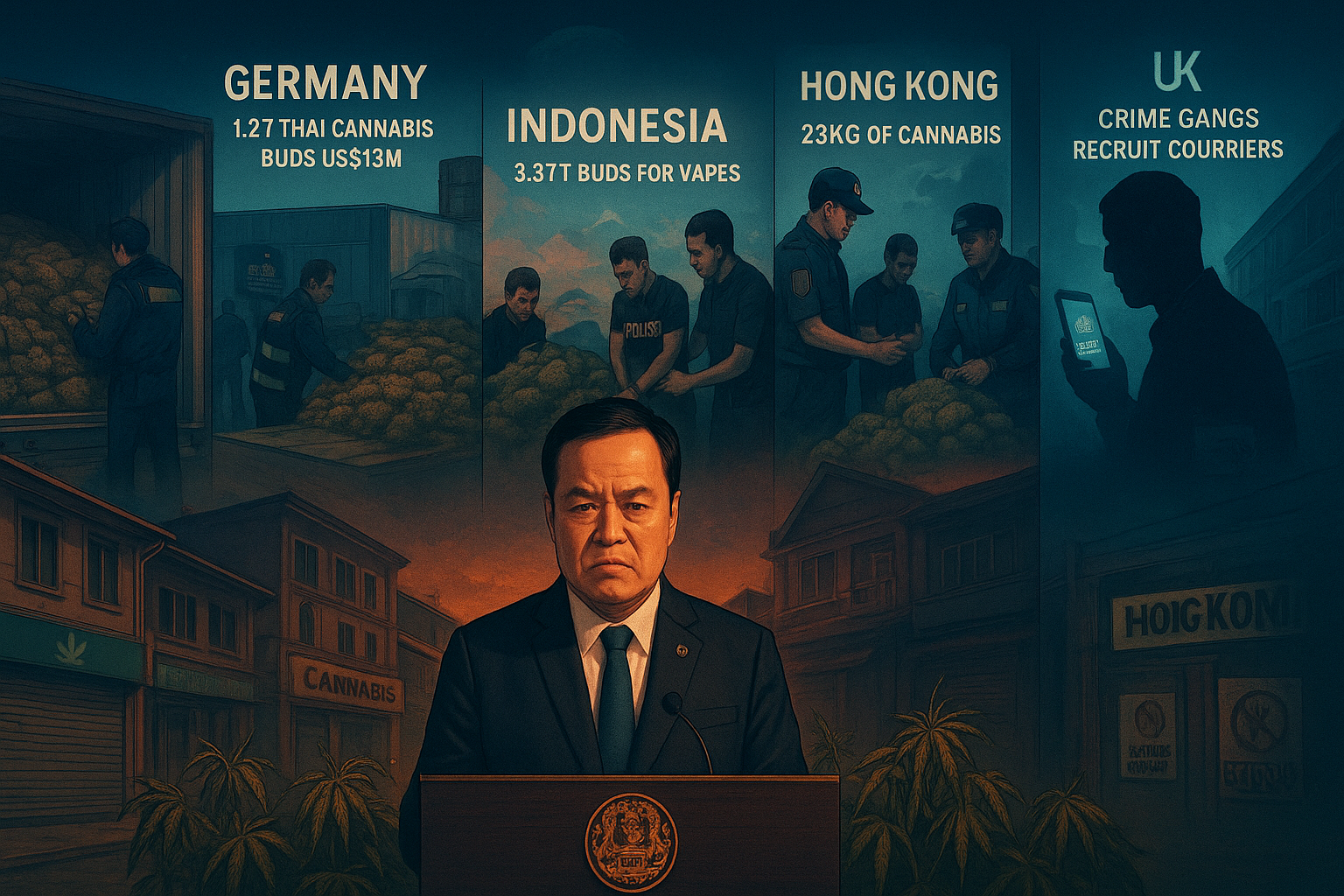
Thailand's cannabis experiment is under serious strain. A cascade of international seizures - spanning Germany, the United Kingdom, Indonesia, and Hong Kong - has exposed what happens when a regulated market is built on aspirations rather than enforceable rules. Four years after Thailand became the first Asian country to decriminalise cannabis, Prime Minister Anutin Charnvirakul is publicly weighing whether to reverse course entirely.
The core problem isn't unique to Southeast Asia. Any jurisdiction that liberalises cannabis without simultaneously constructing a tight compliance architecture - seed-to-sale tracking, licensed wholesale channels, documented supply chains, hard limits on production volume - creates conditions where illicit diversion becomes almost inevitable. Operators in regulated U.S. markets know this well: states that moved quickly on adult-use sales before building out their tracking infrastructure, such as early point-of-sale integration challenges in newer markets, often found that leakage into unregulated channels followed. Even mature systems like those supporting cannabis pos montana compliance requirements exist precisely because without granular inventory accountability at the retail level, the gap between what enters a supply chain and what's sold legally widens fast. Thailand, by contrast, never got that architecture in place at all.
Germany's Hanover Customs Office confirmed last week that investigators dismantled a sea-corridor smuggling route operated by a German-Polish network, seizing two shipments of Thai cannabis totalling 1.2 tonnes with an estimated street value exceeding US$13 million - concealed inside containers of building materials. On the same day, Indonesian authorities seized 3.37 tonnes of Thai cannabis buds in East Java, believed to have been destined for vape products sold in Jakarta and Bali. Twelve people, including Thai nationals, were arrested. In Hong Kong, two individuals arriving from Thailand were caught carrying a combined 23 kilograms of cannabis buds. And in the UK, crime gangs have been recruiting couriers via Telegram, offering free holidays to Thailand in exchange for carrying packages home - a trafficking route now generating its own stream of arrests, some in zero-tolerance transit countries like Singapore and Turkey.
When the Supply Glut Breaks the Legal Market
Here's the mechanism at work. Thailand's 2022 decriminalisation opened the door to commercial cultivation, and growers moved quickly. Dispensaries proliferated across high streets and resort towns, selling high-potency product at low prices. Supply outpaced demand. Farm-gate prices - which had once exceeded 10,000 baht per kilogram by some grower accounts - collapsed to roughly half that. For small cultivators, those margins don't support a legal business.
What fills that gap is predictable: export markets willing to absorb volume at prices domestic buyers won't pay. Criminal networks, in other words. One grower who spoke to regional media under a changed name described leaving the industry entirely, citing the collapse in wholesale pricing and what she characterised as dark money flooding cultivation operations. "Right now the price has dropped lower than before," she said. "I'm furious at myself for ever having been fooled into growing it in the first place."
That's a structural failure, not a moral one. Without hard production caps, without mandatory wholesale licensing, without inventory reconciliation requirements that match what licensed dispensaries receive against what was cultivated, oversupply is a near-certainty. Cannabis retail operators in regulated U.S. states understand the downstream version of this problem: when the wholesale market floods, brands cut prices, retailers feel margin pressure, and unlicensed competitors - unburdened by excise tax, compliance costs, or testing requirements - gain ground. Thailand skipped the compliance infrastructure and arrived at the worst outcome directly.
The Legislation Gap Is the Central Failure
A Cannabis Bill has been moving through Thailand's parliament for years. It has not passed. That matters enormously, because without enacted law, there is no authoritative framework for who holds a valid cultivation license, what production volumes are permissible, how dispensaries verify compliant sourcing, or what penalties apply to diversion. Dispensaries - which now require a licence and whose customers technically need a certificate of medicinal need - are operating inside a compliance structure that is real in name but porous in practice. Recreational consumption remains open and visible.
The absence of firm regulation doesn't just create enforcement problems; it destroys legitimate business confidence. Operators can't make durable capital decisions - on buildout, on inventory systems, on staffing - when the legal foundation beneath them might shift entirely. That's not theoretical risk management. It is the lived reality for cultivators and retailers who entered this market expecting a functioning regulatory framework and instead found themselves in a policy vacuum. Several hundred dispensaries have already closed since Thailand began tightening operating rules last year. More will follow.
What International Operators and Regulators Should Take From This
The seizures and threatened re-criminalisation carry a pointed lesson for any jurisdiction considering cannabis liberalisation. The Thai model - decriminalise first, legislate later - has produced exactly the outcome that robust pre-launch compliance design is meant to prevent. Illicit diversion at scale. Supply chain opacity. Criminal networks embedding into a legitimate industry's infrastructure. International enforcement exposure.
For B2B operators in established markets, the Thai situation is also a reminder of why supply chain documentation matters at every link - not just at the point of retail sale. When cultivators, processors, and dispensaries can't demonstrate clean chain-of-custody through verified licensing and tracked inventory, the entire market becomes suspect in the eyes of regulators, trading partners, and foreign governments. That reputational damage is hard to reverse.
Prime Minister Anutin's warning that he is "prepared to shut down" the industry is not empty political noise. It reflects a government that liberalised without the tools to enforce what it promised. The British embassy repeating warnings to nationals not to carry packages for strangers is a downstream consequence of that failure - one that now spans four jurisdictions and keeps accumulating. Whether Thailand pulls back on decriminalisation or finally passes workable legislation, one thing is clear: a regulated cannabis market without enforceable regulation is, in practice, not regulated at all.