
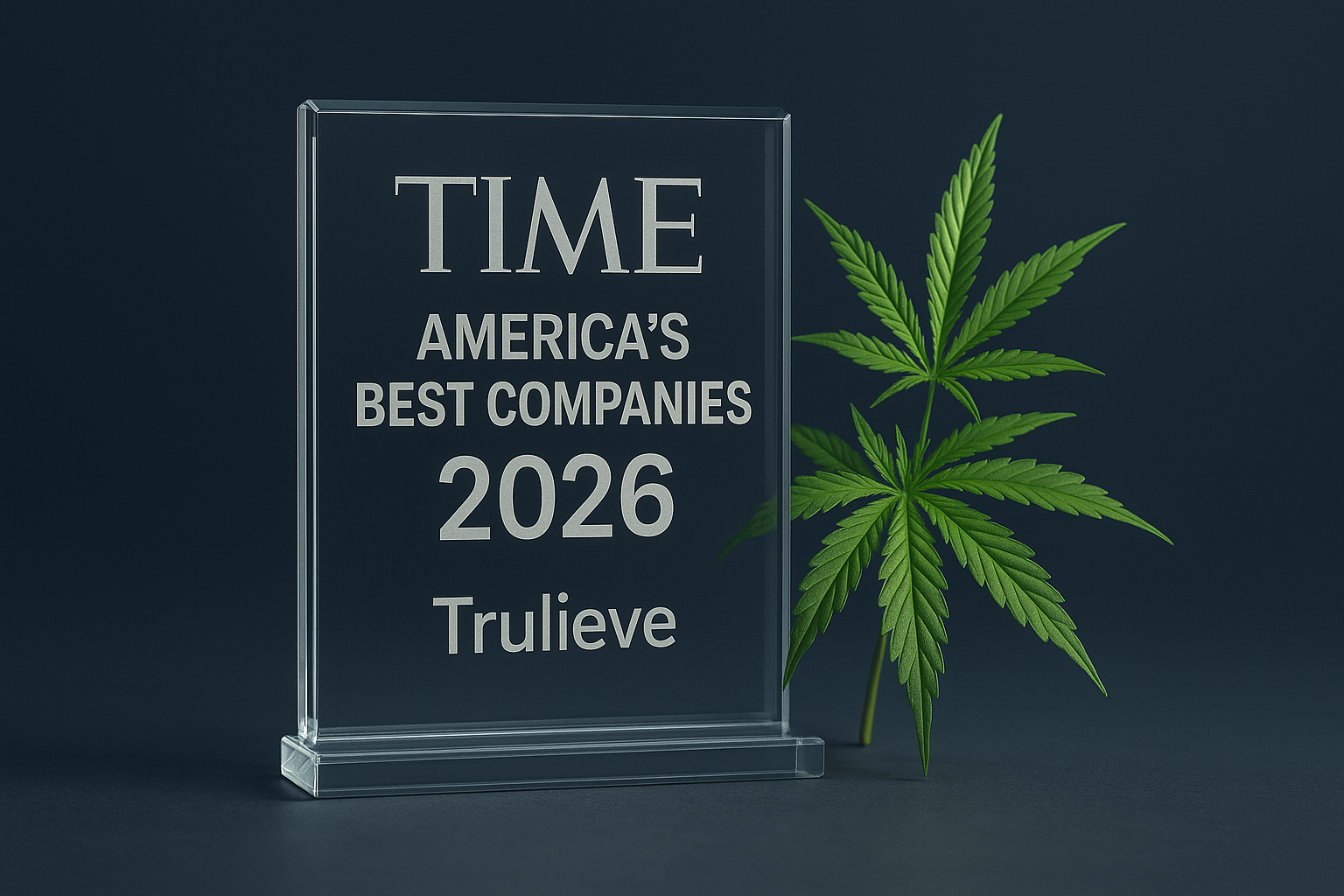
Trulieve has secured a spot on TIME's list of America's Best Companies for 2026, one of only two cannabis operators to make the cut. The list, built jointly by TIME and Statista, screened more than 7,200 companies against measures of employee satisfaction, financial strength, and sustainability transparency. Trulieve landed at 921 - a modest position numerically, but a notable one given how few plant-touching businesses cleared the eligibility bar at all.
That scarcity is the real story here. Mainstream business rankings have historically kept cannabis operators at arm's length, partly because federal illegality complicates standard financial reporting and partly because sustainability disclosure frameworks weren't built with 280E tax burdens or seed-to-sale tracking mandates in mind. For a multi-state operator running dispensaries across eight states, including Arizona, getting evaluated on the same terms as companies outside the plant-touching space signals something operators have been chasing for years: legitimacy in the eyes of institutions that still treat cannabis as a compliance risk rather than a retail category. The operational backbone that supports that legitimacy matters too - inventory accuracy, tax reporting, and point-of-sale reliability all feed into the kind of financial transparency these rankings reward, which is why tools like POS software for Oregon cannabis retailers have become part of the broader conversation about how operators professionalize back-office functions across state lines. POS software for Oregon cannabis retailers
Why Financial Strength Is Harder to Prove in Cannabis
Financial strength sounds like a straightforward metric until you consider what cannabis companies are actually working with. Section 280E of the federal tax code bars businesses trafficking in federally controlled substances from deducting ordinary business expenses, which means cannabis retailers post effective tax rates far above what comparable retailers in other sectors pay. Layer on state-level excise taxes, cash-heavy operations because federal banking access remains limited, and licensing costs that vary wildly by jurisdiction, and you start to see why "financial strength" in this sector means something different than it does for a typical retailer. A multi-state operator posting durable numbers under those constraints is, in practice, clearing a higher bar than the ranking's raw criteria might suggest.
Sustainability Transparency Meets an Industry Still Building Standards
Sustainability transparency is the newer, thornier piece of this. Cannabis cultivation carries its own environmental footprint - water use, energy-intensive indoor grows, packaging waste from mandated child-resistant containers - and the industry hasn't settled on uniform disclosure standards the way public companies in other sectors have. Regulators in individual states have started pushing packaging and waste rules, but there's no federal framework tying it together. For Trulieve to score on this axis suggests internal reporting practices that go beyond what state compliance logs require, which is worth noting for other operators watching where public and institutional scrutiny is headed next.
What This Signals for Operators and Investors
For dispensary owners and multi-state operators watching from the outside, the takeaway isn't celebratory so much as strategic. Recognition on a mainstream business list carries weight with investors, landlords negotiating retail leases, and payment processors still cautious about serving plant-touching accounts. It also raises the bar. If two cannabis companies can meet these criteria, the argument that the industry is too immature or too opaque for standard financial scrutiny gets harder to sustain. That's a useful data point heading into further conversations about banking access and interstate commerce, even if it doesn't resolve them.
- Only two cannabis companies appeared among more than 7,200 businesses evaluated
- Ranking criteria included employee satisfaction, financial strength, and sustainability transparency
- Trulieve operates dispensaries in Arizona and seven other states