NUG Directive Sparks Rare Dispute Over Fuel Supplies to Ethnic States
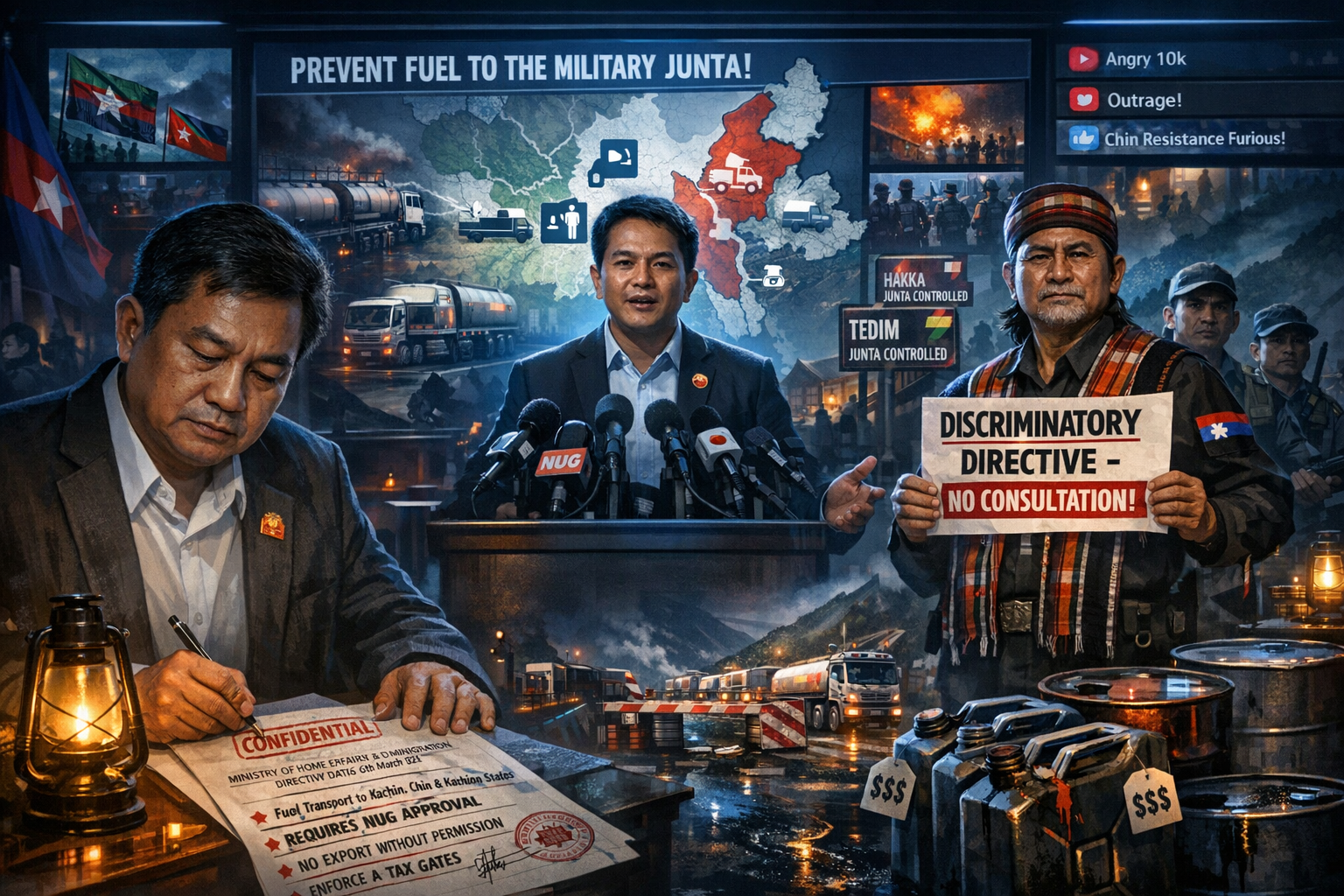
On March 6, Myanmar's National Unity Government (NUG) issued a confidential directive requiring explicit approval for fuel transit to Kachin, Chin, and Rakhine States, igniting an unusual public rift within the anti-junta resistance. This move, aimed at curbing junta access, has instead fueled accusations of discrimination and logistical chaos among ethnic allies.
Key Provisions of the Directive
Signed by U Lwin Ko Latt, the order targets fuel moving through NUG-controlled areas, mandating oversight by the Ministry of Home Affairs and Immigration. It explicitly allows oil imports into controlled zones but prohibits exports without permission, citing a global fuel crisis from Middle Eastern disruptions.
- Applies to all fuel destined for Kachin, Chin, and Rakhine States.
- Directs township tax gates to enforce strictly from issuance date.
- Notifies union ministries, coordination offices, and local administrations.
Backlash from Ethnic Resistance Leaders
Salai Thang Cung Phe, Chairman of the Interim Chin National Consultative Council (ICNCC), decried the lack of consultation, calling it discriminatory toward ethnic state populations. In Chin State, where revolutionaries control seven of nine townships—junta holding only Hakha and Tedim—fuel typically flows freely from central plains and India. Critics warn of black markets, price surges, and civilian hardship, with social media buzzing in Chin circles and beyond.
This rare discord highlights fragile alliances in Myanmar's multi-ethnic resistance, where ethnic armed organizations (EAOs) have long managed their own supply lines amid the junta's 2021 coup fallout.
NUG's Stated Rationale and Context
U Nay Phone Latt, spokesperson for the NUG Prime Minister’s Office, defended the measure as essential to block fuel from reaching the "terrorist military." Allies' shipments would be approved post-verification. Amid escalating civil war, such controls mirror resource strategies in protracted conflicts like Syria or Yemen, where revolutionary governments centralize logistics to starve regime forces.
Chin's strategic position—bordering India—makes it vital for resistance supply chains, but unchecked flows risk junta diversion, a persistent issue since fuel smuggling sustains military operations.
Implications for Unity and Revolution
Beyond immediate shortages, the directive risks eroding trust in the NUG's federalist pledges, potentially fracturing the anti-junta front at a critical juncture. Skyrocketing prices could alienate civilians, breeding dissent in ethnic heartlands key to guerrilla warfare. Long-term, transparent coordination on resources is crucial; without it, parallel economies may deepen divides, echoing historical ethnic tensions that have plagued Myanmar's democracy movements.
Resolution demands dialogue to balance security with equity, ensuring fuel bolsters resistance rather than undermines it.